Why a den

Calm is easier to find when it already has a place.

A den is not an escape from everyday life. It is a familiar destination within it—somewhere the same cue, reward, and routine can make uncertain moments easier to understand.

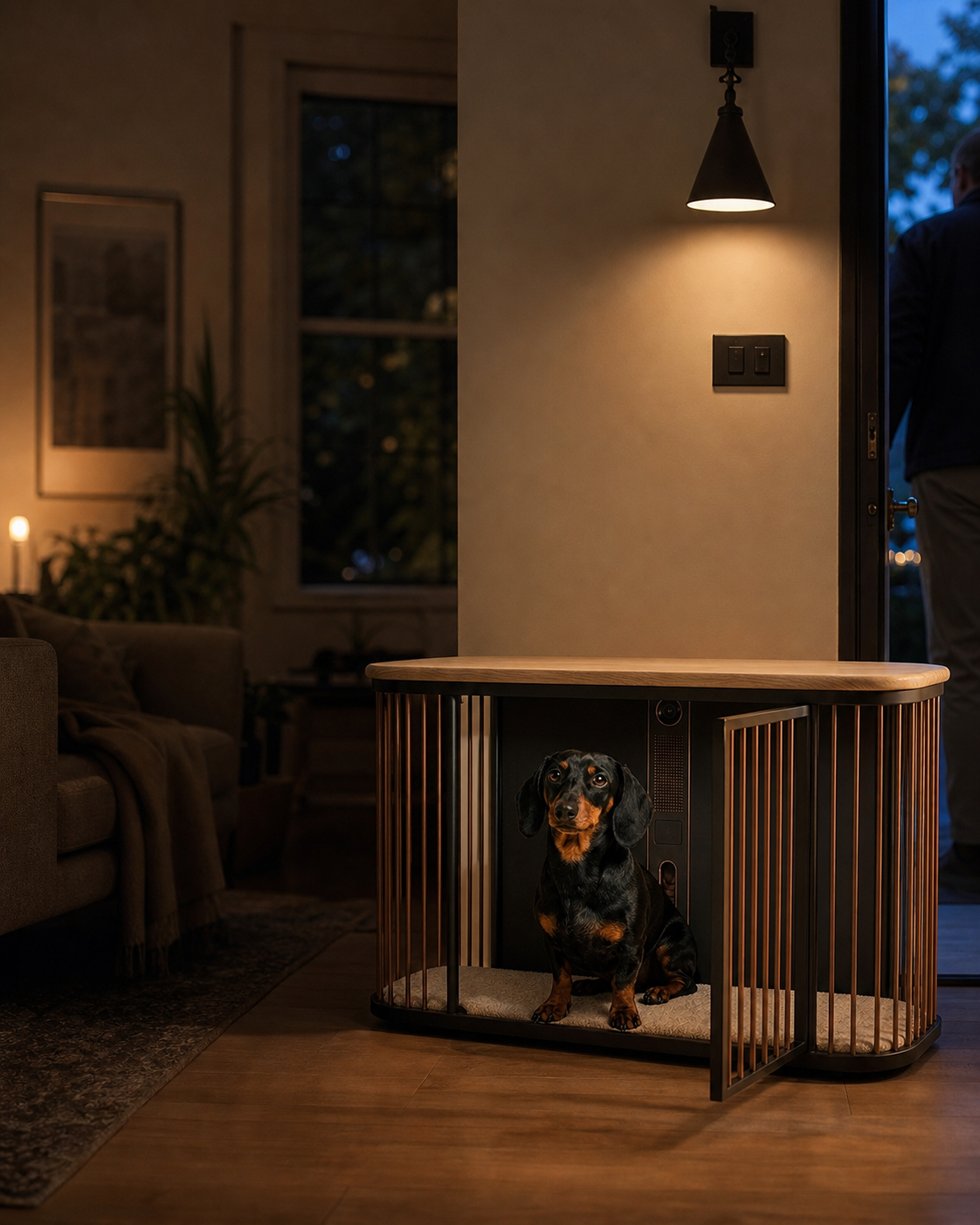
A dachshund waits calmly inside Koja while a visitor arrives
Moment 01 · The doorbell

Turn the trigger into a cue.

The doorbell does not have to mean charge the entrance. With practice, it can mean go to your place. Koja gives that cue one consistent destination and puts a quiet reward where the calm response happens.

What consistency looks like

Use the same cue before opening the door, reward the settled behavior, and let the den remain available after the visitor comes in.
Training principle: AKC doorbell manners ↗
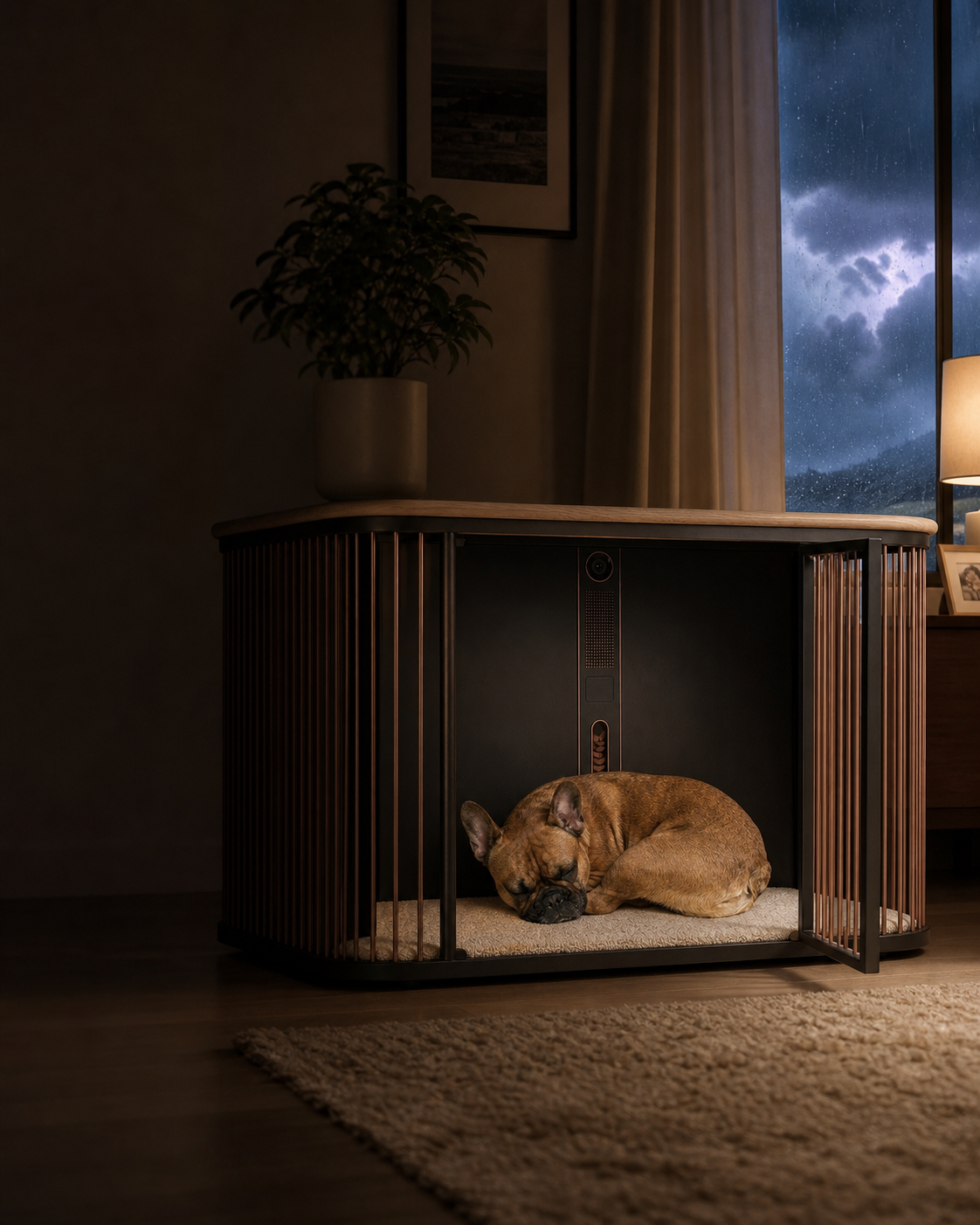
A French bulldog rests inside Koja during a stormy night
Moment 02 · Loud nights

Give uncertainty a plan.

Prepare the retreat before the first boom. Their den stays familiar while a steady routine, your voice, and a protected place make the outside noise easier to weather.

Before the noise starts

Keep the den accessible, add familiar bedding, practice settling on ordinary days, and never wait for the frightening moment to introduce the space.

Pet welfare guidance: RSPCA fireworks advice ↗
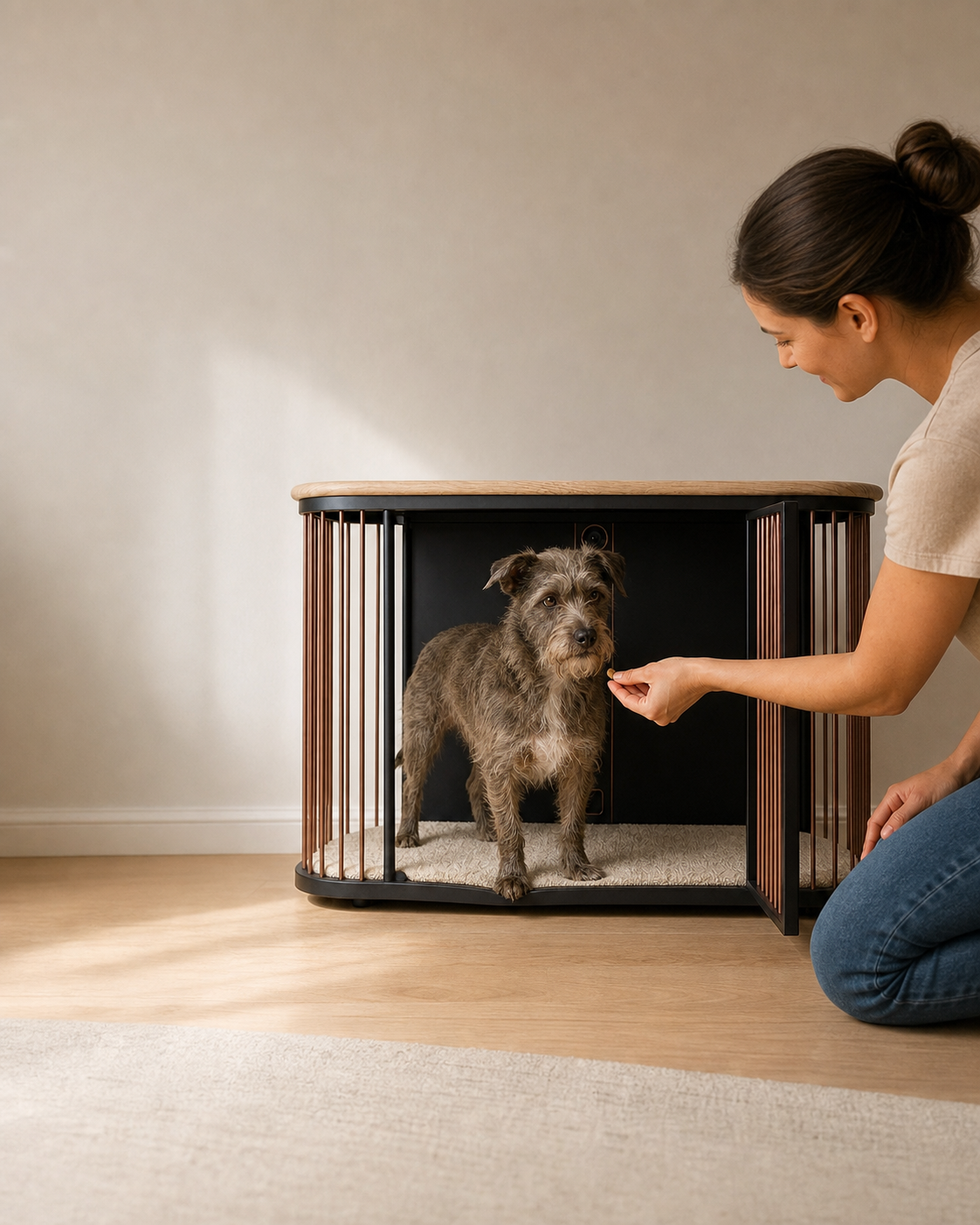
A caregiver rewards a rescue dog beside the Koja den
Moment 03 · Every caregiver

Care changes hands. The routine does not.

The same sleep, settle, potty, and reward cues can follow them from you to the sitter and back again. A shared place makes good care easier to repeat—even when the person providing it changes.

A routine people can share

Keep cues short, agree on when rewards happen, and use the same sequence around departures, returns, and sleep.

Study: Generation Pup longitudinal research ↗
QuestionsBefore they move in.
Reserve yours · from $167/mo